
 French
 English
 German
 Spanish
 Italian
 Russian
 Arabic
 Korean
 Japanese
 Dutch
 Danish
 Norwegian
 Portuguese
 Turkish
 Czech
 Lithuanian
 Polish
 Slovenian
LSR Compression Molding vs Injection Molding: Which Process Fits Your Part?
Table des matières
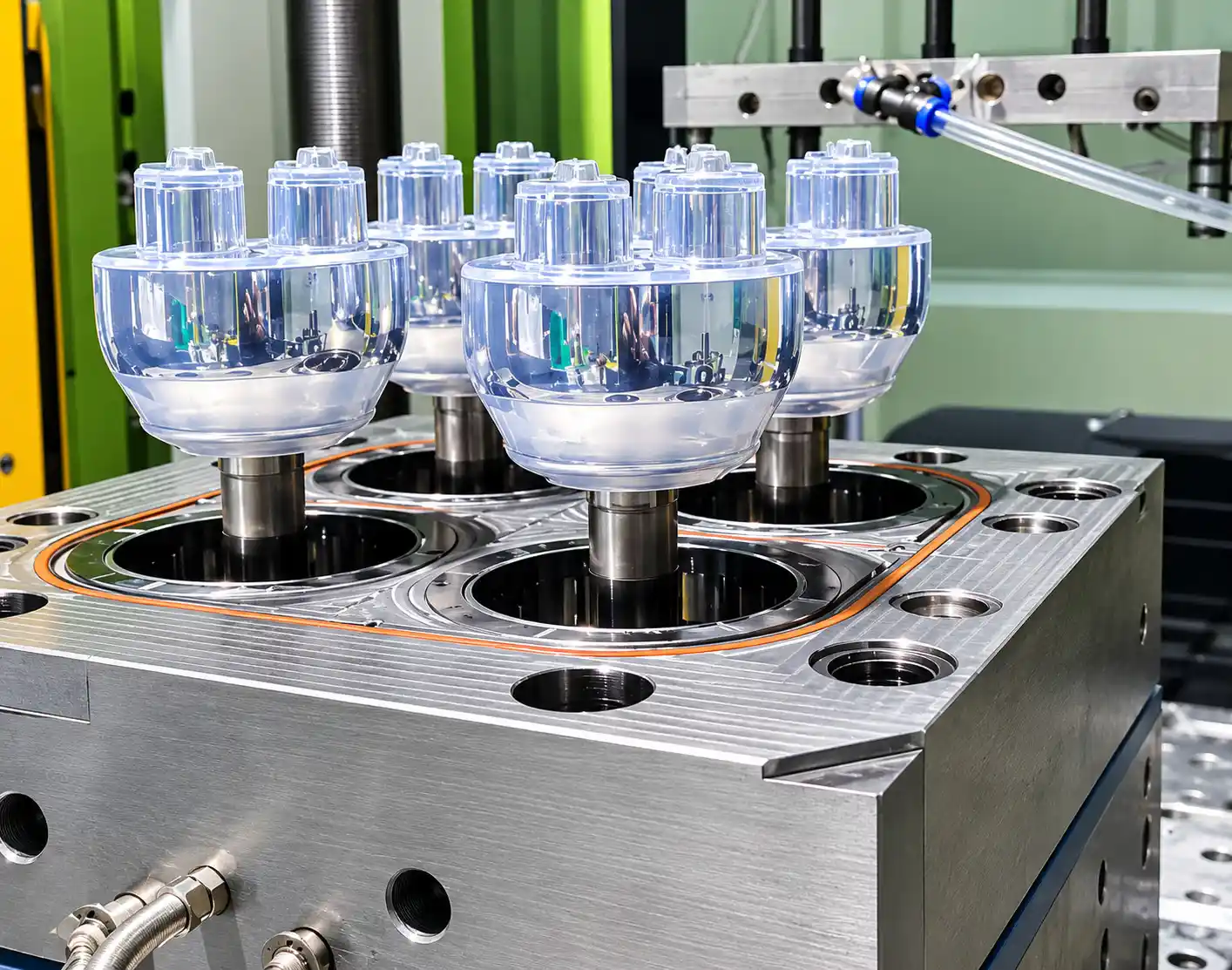
Ask three silicone molders to quote the same part, and you may get three different process recommendations. One supplier pushes compression molding because that’s what their shop is set up for. Another pushes injection molding because they have idle presses that need work. A third asks about your annual volume before saying anything at all.
That last supplier has the right approach. The choice between LSR compression molding and LSR injection molding isn’t about which process sounds more advanced. It’s about matching the process to your part geometry, your volume, your tolerance requirements, and your budget. This article breaks down how each process works, where the real costs sit, and how to evaluate your own project before you request a quote.
What Is the Difference Between LSR Compression Molding and Injection Molding?
Both processes shape liquid silicone rubber into finished parts, but they get there differently.
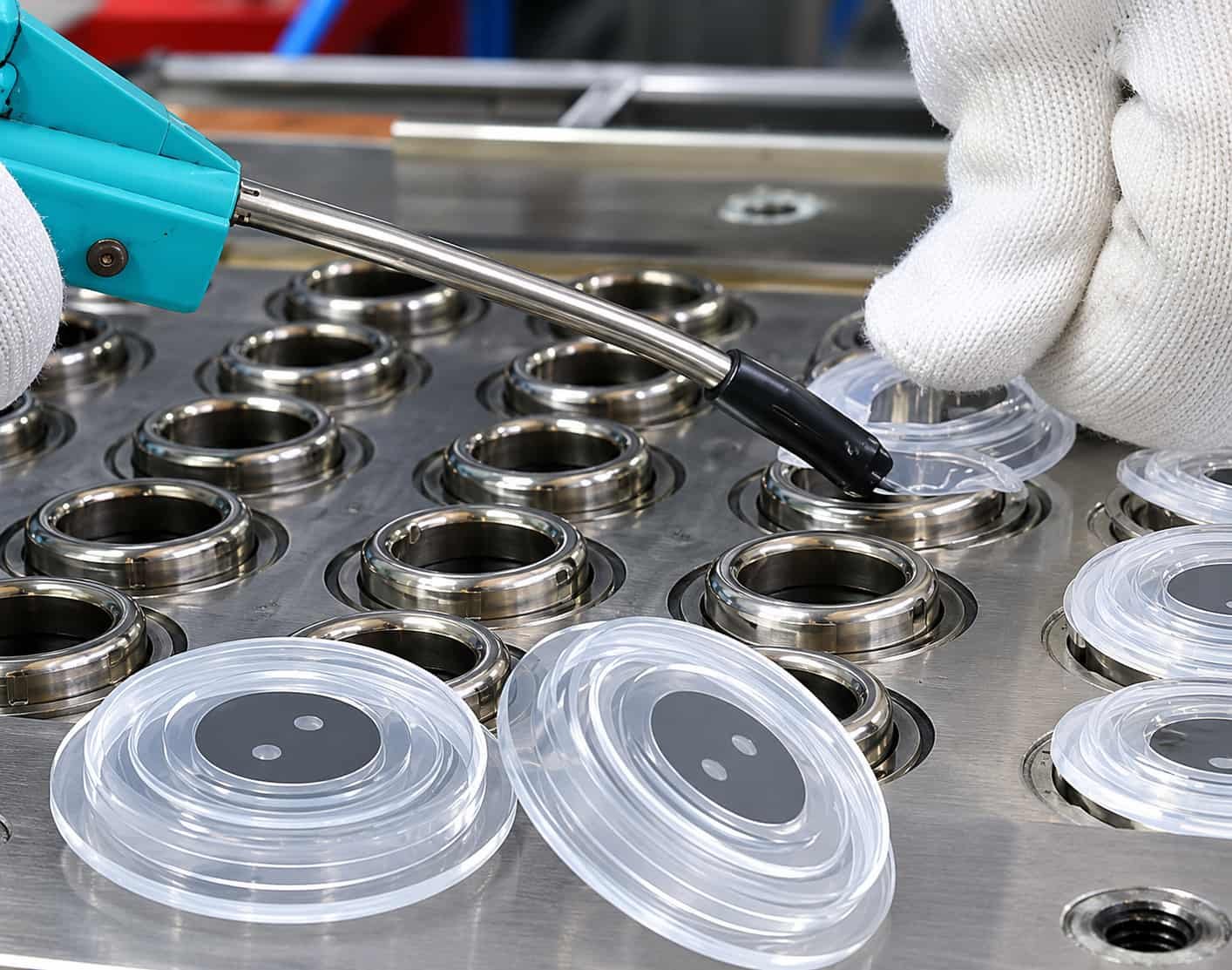
In the lsr compression molding process, an operator places a pre-measured, pre-mixed slug of silicone material directly into an open, heated mold cavity. The press closes, heat and pressure cure the material into shape, and the operator removes the part once it sets. Material feeding is largely manual or semi-manual, and mixing happens before the material reaches the mold.
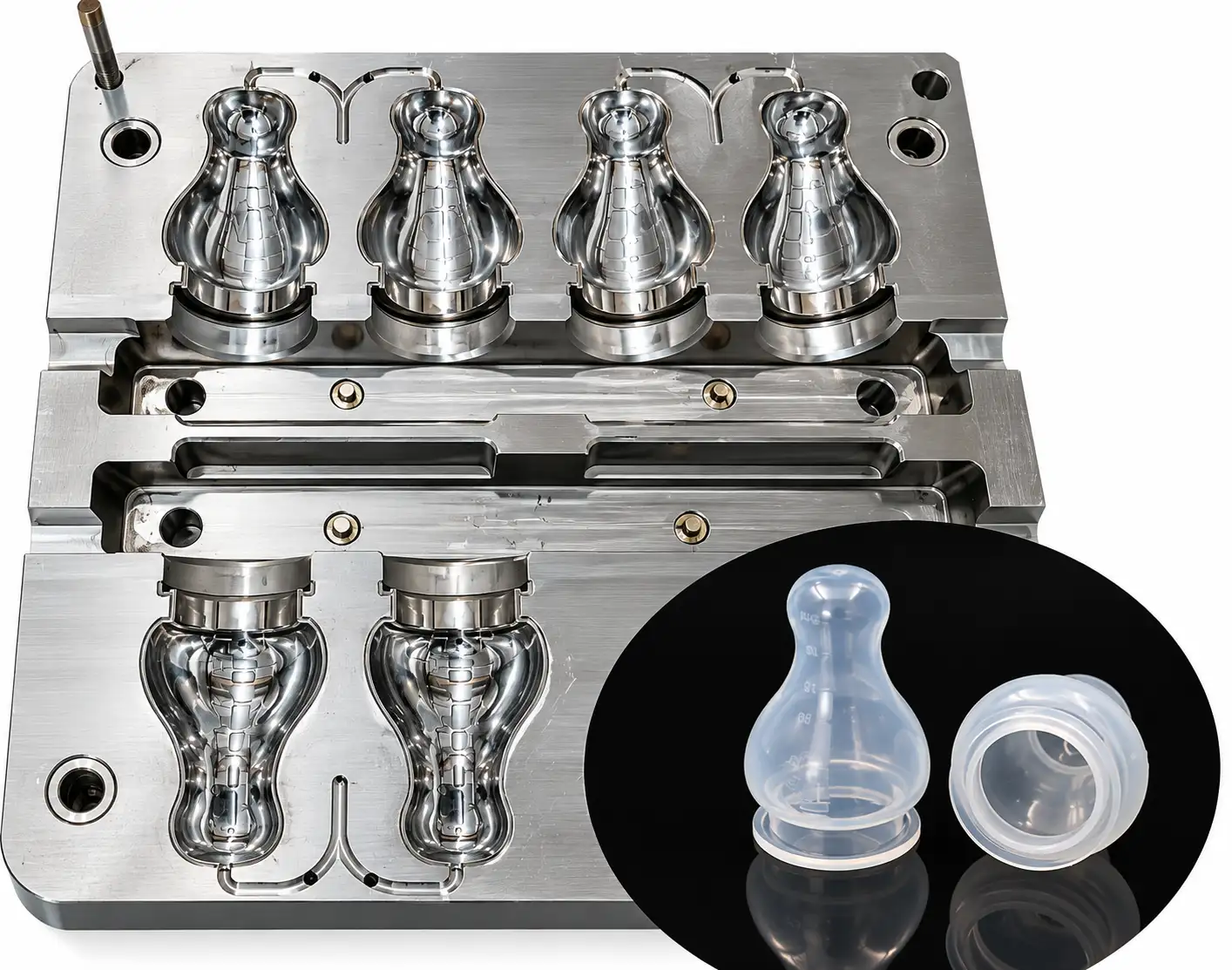
LSR injection molding works differently. Two liquid silicone components — usually labeled A and B — are pumped from separate drums, metered, mixed, and injected into a closed mold under pressure through a runner system. The mold stays closed and heated throughout the cycle, and a screw or plunger controls exactly how much material enters each cavity.
The practical differences show up in a few places:
- Material feeding: Manual placement (compression) vs. automated metering and injection (injection molding).
- Mold filling: Compression relies on the closing press to spread material through the cavity; injection molding pushes material precisely into every corner through a runner system.
- Curing: Both use heat to cure, but injection molding’s closed-mold, pressurized filling tends to produce more consistent cure across a part.
- Automation and waste: Injection molding supports full automation and generates less scrap material because metering is exact. Compression molding depends more on operator skill and produces more leftover flash and trim.
Here’s the point buyers often miss: don’t judge these two methods only by machine type or the mold’s sticker price. A cheaper tool up front can still cost more per part once you factor in labor, scrap, and cycle time. The right comparison is total cost and quality over the life of the program, not the invoice for the first mold.
Which LSR Molding Process Offers Lower Tooling and Production Costs?
This is usually the first question a purchasing manager asks, and the honest answer is: it depends on your volume.
| Cost Factor | Compression Molding | Injection Molding |
|---|---|---|
| Initial tooling cost | Generally lower | Generally higher |
| Material waste | Higher (trimming, flash) | Lower (precise metering) |
| Labor per part | Higher (manual loading/unloading) | Lower (automated) |
| Cycle time | Longer | Shorter |
| Cavity count | Usually fewer | Often multi-cavity, higher output |
| Maintenance | Simpler equipment | More complex, needs skilled techs |
| Material changeover | Faster for small runs | Slower to purge and switch colors |
Lsr compression molding cost sits mostly in labor and cycle time rather than in the tool itself. Because an operator loads material by hand, each cycle takes longer, and that labor cost adds up across thousands of parts. Lsr compression molding tooling cost is lower because the mold design is simpler — no runner system, no injection unit to account for.
Injection molding flips that equation. The mold and machine cost more upfront, but faster lsr compression molding cycle time comparisons favor injection once you’re running multi-cavity tools with automated demolding. Material waste drops too, since metered shots leave less flash and scrap than hand-loaded slugs.
For a project running a few thousand parts a year, compression molding’s lower tooling investment often wins. For a project running hundreds of thousands of parts, the lower per-part cost of injection molding usually overtakes the tooling savings within the first production run or two. Ask your supplier for a cost-per-part breakdown at your actual annual volume, not just a mold quote.
Articles connexes :

When Should You Choose Compression Molding for Silicone Parts?
Liquid silicone rubber compression molding fits well in a specific set of situations, and it’s not a lesser choice when those situations apply.
Good fits include:
- Low-volume production runs, typically under 20,000–50,000 pieces a year
- Prototypes and bridge production while a full injection tool is being built
- Simple to moderately complex geometries without tight tolerances
- Thick-walled silicone parts, like gaskets, seals, or pads
- Projects with a limited tooling budget
- Applications where a small amount of manual handling is acceptable
Limitations of lsr compression molding are real and worth planning around. Manual loading means more labor time per part and more variation if the operator isn’t consistent. Flash control is harder to hold tight because the material spreads as the press closes, rather than being injected into a sealed cavity. Very complex geometries with fine detail, thin ribs, or tight undercuts are difficult to fill evenly. And output volume has a practical ceiling — a process that works well for 5,000 parts a year may become inefficient and expensive at 500,000.
If your project needs custom silicone compression molded parts for a pilot run or a niche product with modest volume, this process can get you to market faster and with less capital tied up in tooling.
When Is LSR Injection Molding Better for Complex or High-Volume Parts?
Once volume climbs and part geometry gets demanding, LSR injection molding starts to make more sense.
Multi-cavity molds let you produce dozens of parts per cycle instead of one or a handful. Automated material metering keeps shot size consistent from the first part to the millionth, which matters when you need repeatable dimensions across a long production run. Thin walls, small features, and fine detail fill more reliably under injection pressure than they would in an open compression cavity.
This is where precision lsr compression molding comparisons usually favor injection: tighter tolerances, better repeat accuracy, and lower labor input per part once the line is running. Industries with strict requirements — medical lsr molding, automotive components, electronics housings, and consumer products with cosmetic surfaces — tend to lean toward injection molding for these reasons.
Cold runner systems, common in LSR injection tooling, also reduce material waste since unused silicone in the runner can often be reprocessed rather than trimmed and discarded. Mold temperature control and venting matter a great deal here — poor venting causes trapped air and short shots, and inconsistent temperature across the mold causes uneven cure and dimensional drift.
None of this means injection molding is automatically the better choice. Custom lsr compression molding solutions still make sense for lower-volume or budget-constrained projects. The deciding factor is whether your project needs the automation, repeatability, and output that lsr compression molding manufacturing at scale can’t match.
How Do Part Design, Tolerances, and Volume Affect the Right Molding Choice?
Before you request a quote, gather the information that actually drives this decision:
- Part geometry, wall thickness, and any undercuts or complex features
- Required tolerances and surface finish
- Expected annual production volume, and how it might grow
- Material grade and any color change requirements
- Acceptable flash limits
- Labor cost in your target production region
- Regulatory requirements, especially for medical or food-contact parts
- Expected product life cycle and whether volume will scale over time
A simple decision guide:
- Low volume, simple design → compression molding may be suitable
- High volume, complex design → LSR injection molding is often the better fit
- Tight tolerances with automated production → injection molding is usually preferred
- Prototype or early validation stage → compression molding can reduce initial investment
- Medical or tightly regulated applications → process selection should include material traceability, mold control, process validation, and inspection capability, not just piece price
Keep in mind that a complex part may justify a higher tooling investment if it lowers cost per part significantly once volume ramps up. Lsr compression molding mold design is simpler to build and modify, which helps early in a program. Lsr compression molding tolerances are generally wider than what injection molding can hold, so if your drawing calls for tight dimensional control, that alone may settle the question.
This is the kind of evaluation a manufacturing partner should walk through with you before quoting. At XFLSRMOLDING, this review looks at part design, volume, material requirements, tolerance targets, tooling budget, and validation needs together, rather than defaulting to whichever process happens to be available on the shop floor that month.
Conclusion
There’s no universal answer to compression vs. injection for liquid silicone rubber — only the right answer for your specific part. Before you request a quote, put together your drawings, annual volume estimate, tolerance requirements, material specification, and any regulatory constraints. A supplier who asks for this information before recommending a process is more likely to steer you toward the right one. A supplier who quotes without asking is telling you something about how they’ll handle the rest of the program too.
LSR Compression Molding vs Injection Molding
Find clear answers about cost, dimensional accuracy, production volume, and how to choose the right LSR molding process for your project.
Is LSR compression molding cheaper than injection molding?
It depends on volume. Compression molding usually has lower tooling cost, but higher labor and material waste per part. For low-volume runs, it's often cheaper overall. For high-volume runs, injection molding's lower per-part cost typically wins despite the higher tooling investment.
Can compression molding hold tight tolerances for precision parts?
Compression molding can produce accurate parts, but it generally holds wider tolerances than injection molding. If your part requires tight dimensional control or fine detail, injection molding is usually the more reliable choice.
How do I decide which process fits my project before requesting a quote?
Prepare your part drawings, expected annual volume, material specification, tolerance requirements, and any regulatory needs. A manufacturer can then recommend compression or injection molding based on your actual production goals rather than equipment availability.