
 Norwegian
  English
  German
  Spanish
  Italian
  Russian
  Arabic
  Korean
  Japanese
  French
  Dutch
Dutch  Danish
  Portuguese
  Turkish
  Czech
Czech  Lithuanian
  Polish
  Slovenian
 LSR Injection Mold Process Challenges in Real Production
Innholdsfortegnelse
Innledning
A startup developing a wearable medical device once requested 120 silicone sealing components for functional testing.
On paper, that looked like a quick prototype job.
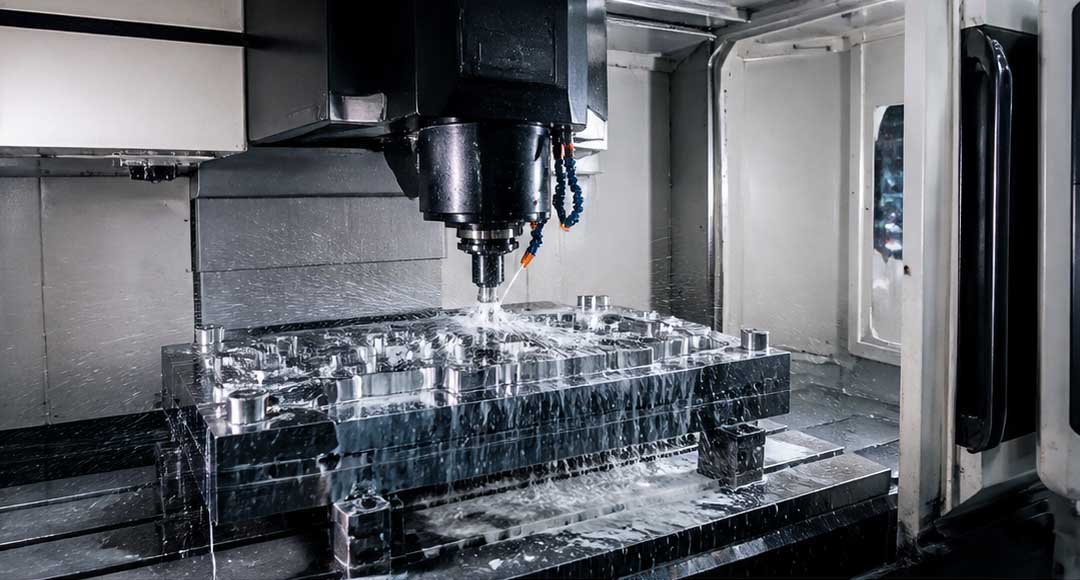
In reality, the LSR injection mold process for this kind of part created more issues than a standard production run. The geometry was thin, the sealing surface couldn’t tolerate flash, and the material had to meet medical-grade requirements—even though the design was still evolving.
That combination tends to expose weaknesses in both tooling and process control.
Why Customers Push LSR Beyond “Simple Parts”
The customer wasn’t asking for appearance samples.
They needed parts that could be assembled, compressed, and tested under real conditions.
That changes everything.
Medical and precision applications rely on the LSR injection mold process because silicone maintains elasticity across temperature ranges and resists chemical degradation. But those same properties make processing less forgiving.
Low viscosity means the material flows into every gap.
Including the ones you didn’t intend.
Engineers often run into trouble with:
Flash at the parting line
Inconsistent cavity fill in micro silicone molding
Difficulty maintaining repeatability across small batches
It sounds manageable until you try to hold tolerances over multiple runs.
Where Traditional Methods Start to Break
Tooling Shortcuts
One common approach is to simplify tooling for prototypes.
That usually leads to uneven cavity pressure and poor venting. The result is inconsistent filling, especially in thin-wall silicone molded parts.
And once flash appears, manual trimming becomes the fallback.
That introduces variability.
Process Instability
Without tight control of temperature and injection parameters, curing behavior shifts.
You may not notice it immediately.
But over several cycles, differences show up in:
Part stiffness
Compression performance
Dimensjonell stabilitet
Again, consistency becomes the challenge.
Repeatability Issues
A lot of suppliers can produce acceptable first samples.
Fewer can maintain the same results across:
Multiple cavities
Different batches
Extended production runs
That gap is where delays and scrap start to accumulate.
Related Articles:

How the LSR Injection Mold Process Is Stabilized
Balanced Cold Runner Design
Problem: Uneven material flow between cavities
If the cold runner is not balanced, some cavities fill faster than others. That affects curing time and final part dimensions.
A properly designed runner system ensures uniform flow, which directly improves yield and reduces scrap.
Flash Control at the Tooling Level
Problem: Flash forming at the parting line
With LSR, even slight gaps in tooling can create flash.
Tooling precision and clamping force must work together. Venting also plays a role—poor venting increases pressure, which pushes material into unwanted areas.
This is not something you fix after molding.
It has to be designed out.
Temperature and Cure Control
Problem: Inconsistent crosslinking
The LSR injection molding process depends on stable mold temperature.
Variations lead to partial curing or localized over-curing, which impacts mechanical properties.
Stable temperature control keeps cycle time predictable and material performance consistent.
Inspection and Validation
Problem: Hidden defects in silicone parts
Visual inspection alone is not enough.
Dimensional inspection using vision systems helps detect small deviations, especially in micro silicone molding.
Validation also includes compression set testing and material verification to ensure long-term performance.
VANLIGE SPØRSMÅL
What is the main challenge in the LSR injection mold process?
Maintaining consistent material flow and curing across cavities, especially for precision or micro silicone parts.
Why is flash difficult to eliminate in silicone molding?
Because low-viscosity silicone easily escapes through small gaps at the parting line under pressure.
Can prototype tooling match production quality?
In many cases, no. Prototype tools often lack the precision and process stability needed for repeatable results.
How do manufacturers improve repeatability?
Through balanced tooling design, controlled process parameters, and structured validation and inspection methods.
Now It’s Your Turn
Have an order you want to place? Reach out to us!