
 Italian
  English
  German
  Spanish
  Russian
  Arabic
  Korean
  Japanese
  French
  Dutch
Dutch  Danish
  Norwegian
  Portuguese
  Turkish
  Czech
Czech  Lithuanian
  Polish
  Slovenian
 LSR Injection Moulding Technology: Durable Biocompatible Parts
Indice dei contenuti
LSR injection moulding technology drives modern product innovation across medical automotive and consumer sectors. Right at project kickoff engineers often struggle with material choice precision targets and cost balance. Therefore clear understanding of LSR injection moulding technology helps teams avoid delays and rework early.
Liquid silicone rubber behaves differently from thermoplastics. However that difference unlocks big advantages. For example stable elasticity survives harsh temperature swings. Meanwhile chemical resistance supports long service life in aggressive environments.
Yet many buyers still ask a simple question. Why choose LSR over other options? Also how does process actually work? This guide answers those concerns with practical insight. Moreover each section focuses on real production challenges and workable fixes.
LSR Injection Moulding Technology Advantages and Basics
Understanding LSR and Its Advantages Over Alternatives
Liquid silicone rubber offers flexibility that rigid plastics cannot match. In addition long term durability stays consistent even after repeated compression cycles. Therefore sealing components maintain performance for years.
Compared with thermoplastics LSR shows better heat resistance. For instance parts can survive extreme cold and high heat without cracking. Meanwhile rubber elasticity supports complex sealing geometry.
However another key advantage comes from automation. LSR injection moulding technology allows high speed cycles with minimal manual handling. As a result labor cost drops while output rises.
Why Manufacturers Prefer LSR Materials
Firstly biocompatibility makes LSR suitable for healthcare devices. Secondly odor free composition works well for food contact applications. Thirdly transparency allows visual inspection or optical functions.
In contrast traditional rubber processing often needs extra finishing steps. Yet LSR molding delivers cleaner parts directly from mold. Therefore scrap rate decreases noticeably.
Material Composition and Chemistry of Liquid Silicone Rubber
What Makes LSR Different Chemically
Liquid silicone rubber contains two main components mixed before injection. These parts react under heat forming a crosslinked elastomer. Consequently final structure shows strong stability.
Moreover platinum curing systems replace peroxide curing methods. That change reduces unwanted byproducts during production. As a result cleaner surfaces appear on molded parts.
Key Material Features for Engineers
- Wide temperature resistance range
- Excellent flexibility under stress
- High tear strength in thin sections
- Stable electrical insulation properties
Additionally LSR materials maintain shape under long term pressure. Hence engineers prefer them for sealing rings and gaskets.
Key Properties and Performance Advantages in LSR Injection Moulding Technology
Mechanical and Physical Strength
LSR parts resist deformation after repeated compression cycles. Therefore seals remain tight even in dynamic systems. Meanwhile elongation capacity allows stretch without tearing.
Environmental Resistance
Silicone rubber withstands UV exposure ozone moisture and steam. Consequently outdoor products benefit from longer lifespan. Also chemical resistance protects parts from oils or cleaning agents.
Stabilità dimensionale
High precision molding allows tight tolerances. For example many applications achieve ±0.02 mm accuracy. Therefore connectors and micro seals perform reliably.
LSR vs Alternative Materials and Processes
LSR vs Thermoplastic Injection Molding
Thermoplastics melt and solidify repeatedly. However LSR undergoes chemical curing forming permanent elasticity. Thus LSR parts resist deformation under heat.
LSR vs Compression Molding
Compression molding requires longer cycle times. In contrast LSR injection moulding technology delivers faster cycles and higher consistency. Therefore high volume production becomes more efficient.
LSR vs HTV Silicone
HTV silicone requires manual handling and secondary trimming. Meanwhile LSR supports automated production with minimal flash. Hence production cost per part often drops.
The Injection Molding Process: From Tooling to Production
Step 1 Material Preparation
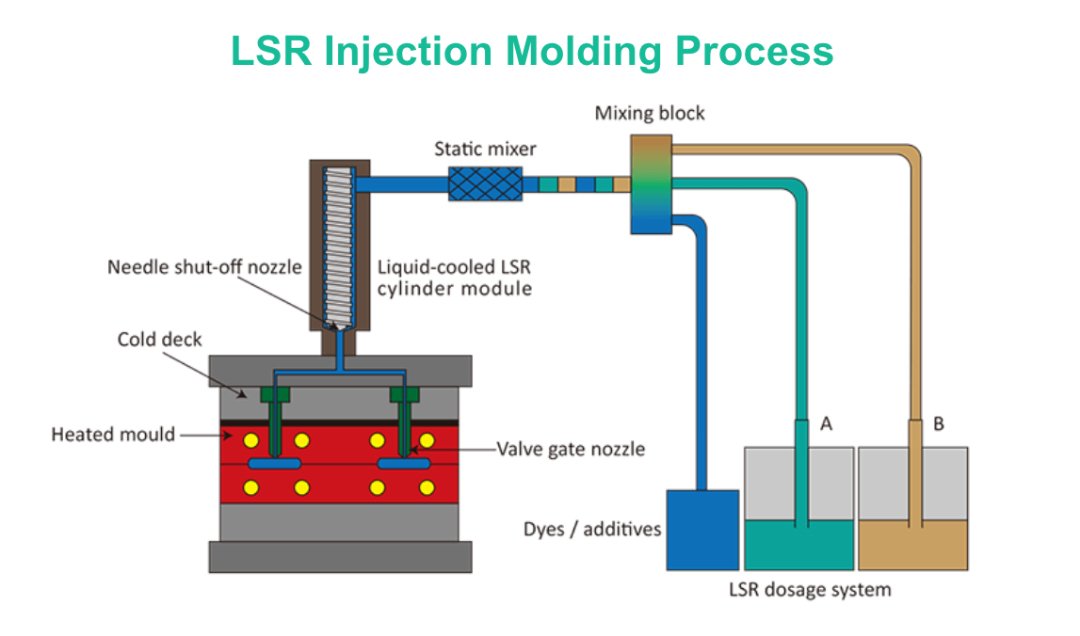
Two component silicone mixes enter injection system through metering units. Then static mixers blend material evenly before injection.
Step 2 Injection and Filling
Liquid silicone flows into heated mold cavities. Due to low viscosity material fills complex shapes quickly. Therefore thin wall designs become feasible.
Step 3 Vulcanization
Heat triggers curing reaction inside mold. As a result silicone transforms into elastic solid form. Cycle time often ranges from seconds to minutes.
Step 4 Demolding and Automation
Finished parts eject automatically using robotic systems. Consequently production lines run continuously with minimal downtime.
Design Guidelines for LSR Injection Moulding Technology
Optimize Part Geometry Early
Design teams should simplify geometry where possible. Complex shapes increase mold cost and cycle time. Therefore early optimization reduces risk.
Control Wall Thickness
Uniform wall thickness improves flow consistency. Moreover uneven sections may cause air traps or defects. Hence balanced design supports better quality.
Consider Draft Angles and Parting Lines
Adequate draft helps smooth ejection. Meanwhile proper parting line placement reduces flash. Thus surface finish improves without extra work.
Quality Standards and Testing Requirements
Medical and Food Grade Compliance
Many LSR applications require FDA or ISO certification. Therefore material traceability becomes critical. Documentation should cover entire production chain.
Mechanical Testing
Tensile strength elongation and compression set tests validate performance. Additionally aging tests simulate long term usage conditions.
Visual and Dimensional Inspection
Automated inspection systems check each part quickly. Consequently defects get detected before shipment. This step protects downstream assembly quality.
Practical Solutions to Common Customer Challenges
Challenge 1 Tight Tolerance Requirements
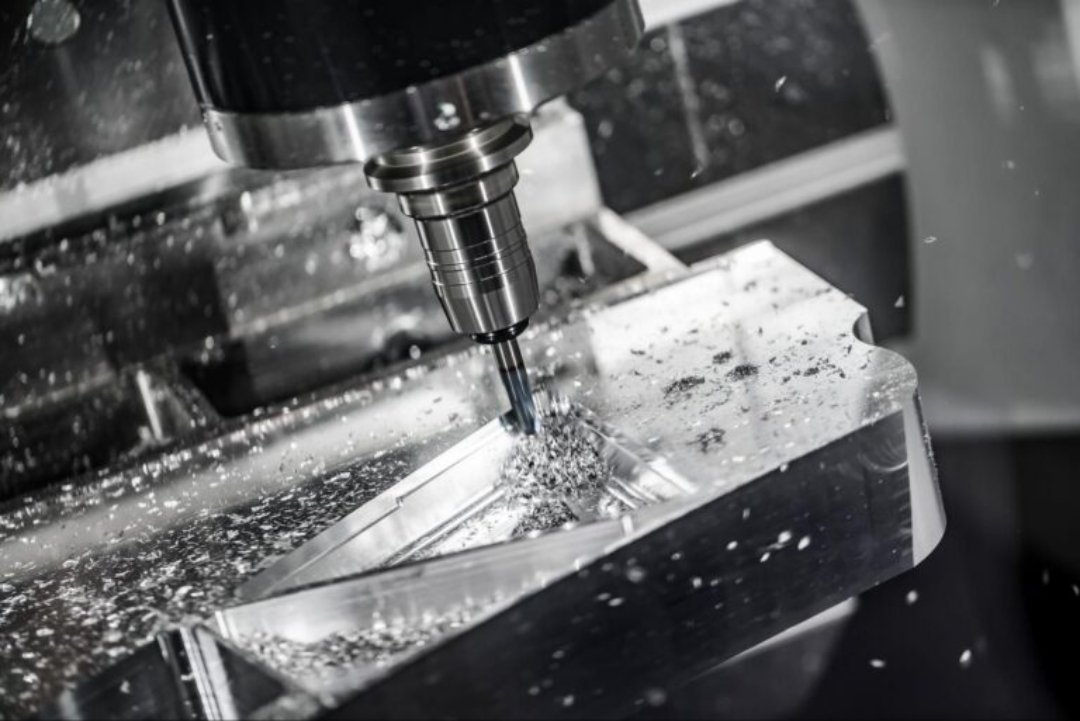
Precision tooling combined with stable process control solves this issue. Moreover advanced mold design improves repeatability across cavities.
Challenge 2 High Production Cost
Automation reduces labor input significantly. In addition cold runner systems lower material waste. Therefore total cost per unit drops over time.
Challenge 3 Complex Multi-Material Parts
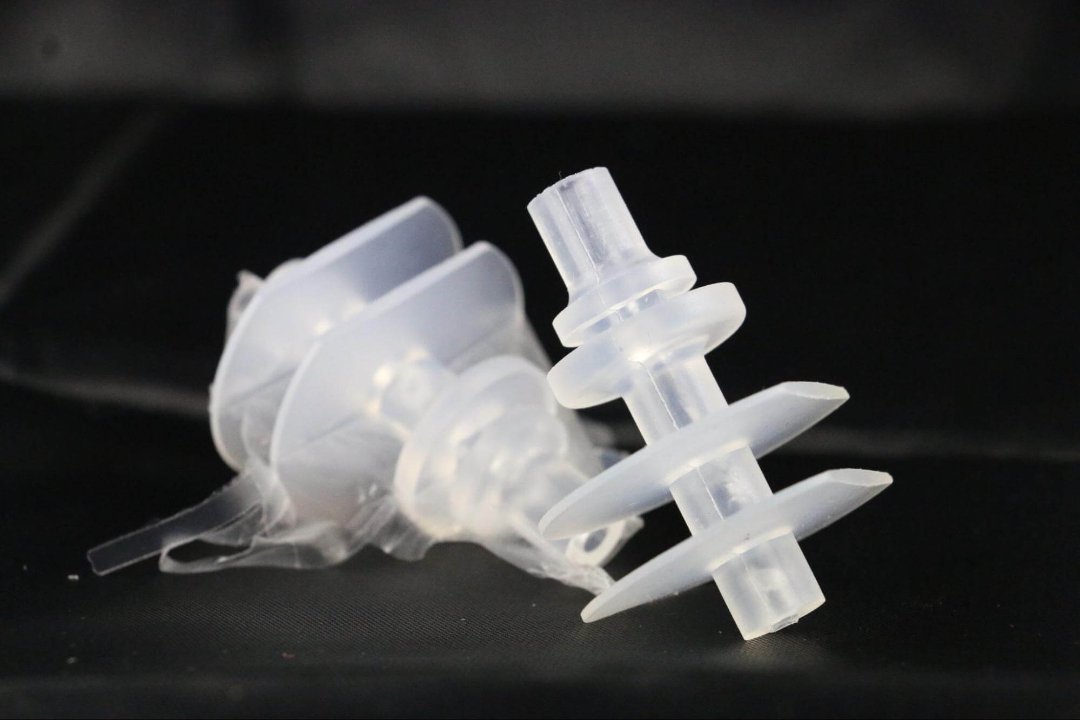
Using lsr 2 shot injection molding allows bonding silicone with plastics. Thus manufacturers create integrated parts without assembly steps.
Why Work with an Experienced LSR Injection Moulding Technology Partner
Faster Development Cycles
Experienced teams reduce trial iterations. Therefore projects move from concept to production faster.
Better Process Control
Skilled engineers fine tune injection parameters quickly. Consequently consistent quality appears across large batches.
Integrated Design Support
A strong partner offers design advice early. Hence potential issues get solved before tooling begins.
Conclusion: Make Smarter Choices with LSR Injection Moulding Technology
LSR injection moulding technology continues shaping advanced manufacturing across industries. Its combination of durability flexibility and precision makes it a preferred solution.
However success depends on smart material selection and thoughtful design. Additionally choosing capable partners speeds up development while reducing risk.
Therefore companies aiming for high performance components should evaluate LSR early in project planning. With right approach production becomes faster cleaner and more reliable.